
In brief: What is E120?
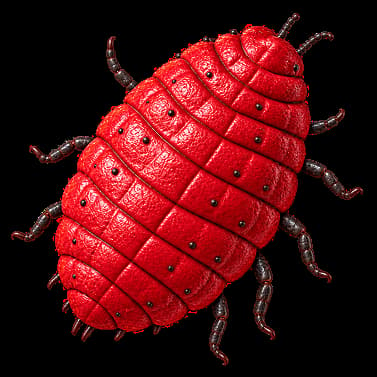
E120 is the European additive number for carminic acid and carmine. Both are used as red colours and originate from the cochineal scale insect Dactylopius coccus Costa. E120 is therefore neither plant-based nor synthetic.
The current EU name is “Carminic acid, Carmine”. “Cochineal” describes the source material made from dried female insects, but since October 2019 it has no longer formed part of the official name of the authorised additive.
How are carminic acid and carmine produced?
Under the EU specification, carminic acid is obtained by aqueous, aqueous-alcoholic or alcoholic extraction from the dried bodies of female cochineal insects. Carmine refers to aluminium lakes of carminic acid. In both cases, carminic acid is the colouring principle.
Commercial preparations may also contain small amounts of proteinaceous material derived from the source insect. This is relevant when potential allergic reactions are assessed.
How to identify E120 on an ingredient list
Food additives are generally listed by their functional class followed by their specific name or E number. E120 may therefore appear as “colour: carmine”, “colour: carminic acid” or “colour: E120”.
Depending on the language and market, a package may also use “cochineal”. Although this term is still common internationally, it is not the current legal name of E120 in the EU.
- Look for E120, carminic acid and carmine
- Cochineal may also appear on non-EU or multilingual labels
- A red or pink colour alone does not prove that E120 is present
Where may E120 be used?
E120 is authorised in the EU only for the food categories and maximum levels set out in additive legislation. Depending on the specific rule, these include certain confectionery, desserts, flavoured drinks, red-fruit preserves and selected meat or fish products.
A product’s colour does not reveal its recipe. Manufacturers may use other natural or synthetic colours or no added colour at all. The current ingredient list is the only reliable guide.
Is E120 vegan or vegetarian?
E120 is not vegan because it is obtained from insects. It is also generally not regarded as vegetarian, because insects are animals and are used in its production. Individual diets and certification standards may nevertheless differ.
Religious dietary status cannot be determined from the E number alone either. Anyone following a particular certification should look for the relevant mark or ask the manufacturer or certifying body.
Allergy and safety assessment
In 2015, EFSA confirmed an acceptable daily intake for E120 of 2.5 milligrams of carminic acid per kilogram of body weight. Its refined exposure estimates at the time remained below that value for all population groups assessed.
Allergic reactions are a separate issue: no general threshold can be established for them. EFSA highlighted proteinaceous compounds from the source material and recommended appropriate purification steps. People with a known reaction to carmine should avoid E120 and seek medical advice.
Do not confuse E120 with E124
E124 is also known as “Cochineal Red A” or “Ponceau 4R”. Despite the similar name, it is a synthetic azo colour and is not obtained from cochineal insects. Anyone avoiding animal-derived ingredients should therefore check the E number carefully.
For the wider legal context, read our guide to insects and insect-derived additives authorised in EU food.
In short
E120 covers carminic acid and carmine, whose colouring component is obtained from cochineal insects. E120, carminic acid and carmine are the key terms on ingredient lists. The colour is not vegan, and appearance alone cannot tell you whether a product contains it.
This article is for general information and does not constitute medical advice.