
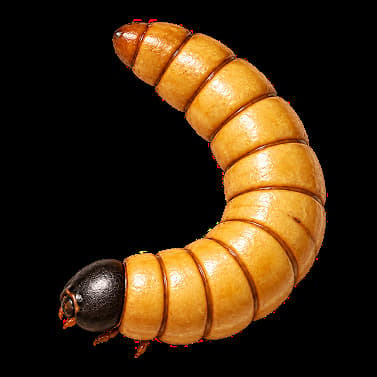
In brief: How can I identify mealworm in food?
If a packaged food contains yellow mealworm, the prescribed designation must appear in the ingredient list. Look for “yellow mealworm” and the scientific name “Tenebrio molitor”, together with the relevant form such as dried, frozen or powder.
A statement near the ingredient list must also warn that the ingredient may cause allergic reactions in people with known allergies to crustaceans and dust mites.
What exactly is a yellow mealworm?
Despite its common name, a mealworm is not a worm in zoological terms. It is the larval stage of Tenebrio molitor, a darkling beetle. The authorised novel foods use whole larvae which, depending on the authorisation, are blanched, frozen, dried or ground.
Each authorised form has its own specification, permitted food categories, maximum levels and labelling rules. Authorisation does not allow mealworm to be added without restriction to every kind of food.
Which forms are authorised in the EU?
There are several EU authorisations for Tenebrio molitor. Regulation (EU) 2021/882 covers whole thermally dried larvae sold whole or as powder. Regulation (EU) 2022/169 covers frozen, dried and powder forms. Since February 2025, Regulation (EU) 2025/89 has also authorised UVB-treated powder made from whole, thermally treated larvae.
UV treatment increases the powder’s vitamin D3 content. If the finished food consequently contains a legally significant amount of vitamin D, an additional statement about the UV treatment and the amount of vitamin D in the nutrition declaration are required.
Names that may appear on the package
The processing form is part of the prescribed designation. A vague phrase such as “insect protein” does not replace it. The exact names laid down in the English versions of the authorisations include:
- Dried Tenebrio molitor larva (yellow mealworm)
- Frozen yellow mealworm (Tenebrio molitor larva)
- Dried yellow mealworm (Tenebrio molitor larva)
- Yellow mealworm (Tenebrio molitor larva) powder
- UV-treated Tenebrio molitor larvae (yellow mealworm) powder
Which foods may contain mealworm?
Depending on the authorisation, permitted categories include bread and rolls, pasta, baking mixes, cereal bars, soups, snacks, meat analogues, certain meat preparations and chocolate confectionery. The UV-treated powder has a smaller, separate list that includes bread, cakes, pasta products, processed potato products, cheese products and fruit or vegetable compotes.
These are legal possibilities, not evidence that mealworm is widely used in those products. Only the current label can show whether a particular food contains it.
What should people with allergies know?
According to EFSA, mealworm proteins may cause sensitisation and allergic reactions. Cross-reactivity makes this particularly relevant to people with allergies to crustaceans or dust mites. The authorisations therefore require a warning in close proximity to the ingredient list.
Additional allergens may enter the insect product through its feed substrate. If, for example, a substance subject to EU allergen labelling remains in the final product, the general allergen rules apply. For anyone with a known allergy, an app cannot replace reading the full current label or seeking medical advice.
Is mealworm automatically a high-quality protein source?
Yellow mealworm contains protein, fat, carbohydrates and the indigestible structural material chitin. Crude protein is commonly calculated from total nitrogen. Because chitin also contains nitrogen, this calculation can overestimate the actual protein content.
The nutritional value of a product depends on its full recipe, the amount consumed and processing. Novel-food authorisation confirms safety under the assessed conditions; it is not a general health claim.
For the complete legal picture across all authorised species, read our guide to insects in food in the EU.
In short
Yellow mealworm is the larva of Tenebrio molitor. Only precisely defined dried, frozen, powder and UV-treated forms are authorised. The package must identify the species and form, and it must carry a warning for people with allergies to crustaceans and dust mites. The current ingredient list remains decisive.
This article is for general information and does not constitute medical advice.